
Grief is not a straight path. It ebbs and flows, catches us unaware, and settles into the quiet corners of our lives. Whether it follows the death of a loved one, the breakdown of a relationship, a betrayal, or even the soft ache of memories tied to people no longer with us, grief asks something difficult of us: to keep going while carrying what feels unbearable.
In these moments, gardening offers something rare and deeply restorative. It does not promise to fix grief, nor to hurry it along. Instead, it provides a gentle framework in which healing can begin—quietly, slowly, and without pressure.
At its core, gardening reconnects us to rhythm. Grief often disrupts our sense of time; days can feel endless, or conversely, disappear without notice. The garden reintroduces a natural cadence. Seeds are sown, shoots emerge, seasons turn. There is a reassuring predictability in this cycle, even when the weather is unpredictable or plans don’t quite go as intended. It reminds us that life continues—not in a way that diminishes loss, but in a way that holds space for it.
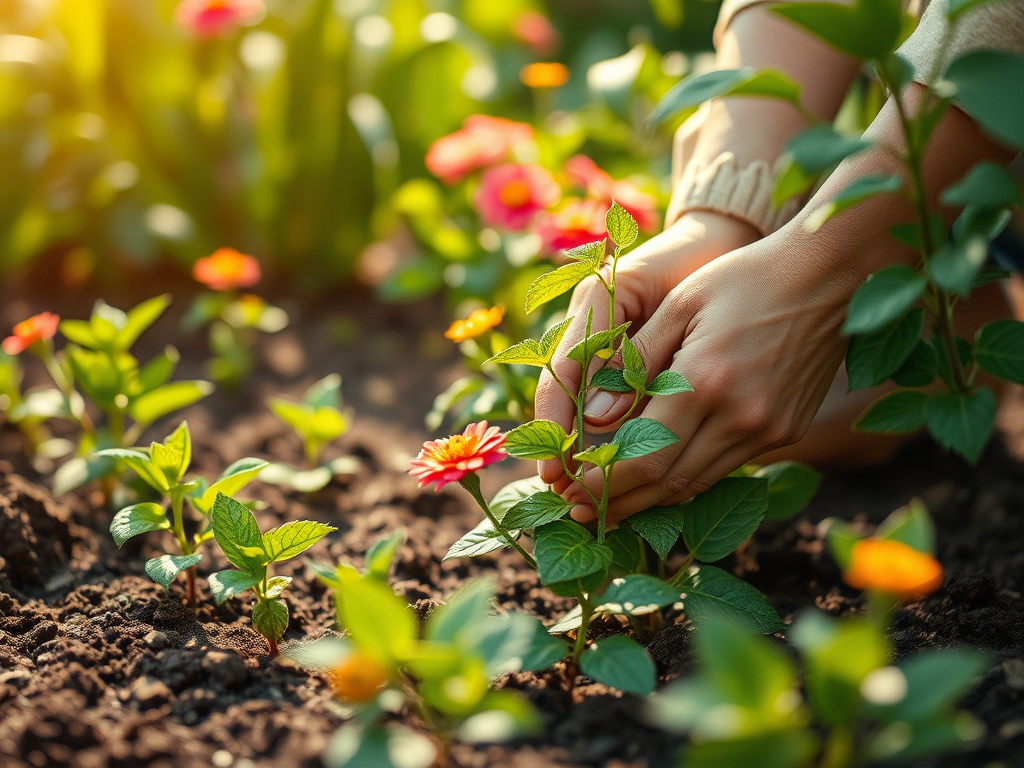
There is also something profoundly grounding about physical interaction with the earth. When grief overwhelms the mind, the body can offer a way back. The simple acts of digging, planting, pruning, or even just pulling weeds require presence. Hands in soil, the scent of greenery, the texture of leaves—these sensory experiences anchor us in the moment. They help to quiet the mental noise and create small pockets of stillness where breathing becomes easier.
For many, gardening also becomes a space for remembrance. A plant can carry meaning in a way that words sometimes cannot. You might grow a favourite flower of someone you’ve lost, or cultivate a corner of the garden that feels like a tribute to a relationship that shaped you. Even the act of tending to plants can echo memories of time spent gardening with family members—parents, grandparents, or loved ones who once stood beside you, showing you how to sow a seed or prune a rose.
These connections can be bittersweet. There may be moments when the garden brings tears rather than comfort. That is not failure; it is part of the process. Grief is not something to be avoided or suppressed, and the garden, in its quiet honesty, allows those emotions to surface safely. It does not judge or rush you. It simply exists alongside you.
Importantly, gardening also introduces the possibility of small, manageable successes. When so much feels out of control, nurturing a plant from seed to bloom can restore a sense of agency. It doesn’t require perfection. In fact, failure is part of gardening—plants don’t always thrive, weather intervenes, pests appear. Yet even in these setbacks, there is a lesson in resilience. You try again. You adjust. You continue.
This resilience mirrors the emotional work of grief. Healing is not linear, and setbacks are inevitable. But just as a garden can recover and flourish again, so too can we find ways to rebuild, even if life looks different than before.
There is also a quiet companionship in the garden. While grief can feel isolating, being among living things—plants, insects, birds—creates a subtle sense of connection. You are part of something larger, something ongoing. Even when alone, you are not entirely alone. The number of times I’ve been accompanied by a Robin, often acting as a foreman checking my work, is one of the delights of my job. Unless the Robin doesn’t approve of what I’ve done!
For those who may feel overwhelmed by the idea of “starting” a garden, it’s worth remembering that it doesn’t have to be grand or ambitious. A single pot on a windowsill, a small patch of soil, or even a few herbs in a container can be enough. The value lies not in the scale, but in the act itself—the intention to nurture and to be present.
Gardening also allows space for hope, though it never demands it. Hope can feel distant or even unwelcome in the depths of grief. Yet when you plant something, you are, in a quiet way, investing in the future. You are acknowledging that there will be days ahead, and that something can grow into them. This is not about forgetting what has been lost, but about allowing life to coexist with that loss.
Over time, many people find that the garden becomes a place of reflection. Not necessarily a place where grief disappears, but where it softens. Where memories can be held with a little less pain, and perhaps even a sense of gratitude begins to emerge alongside the sorrow.
Grief changes us. There is no returning to who we were before. But in tending to a garden, we engage in a process that mirrors our own: we break ground, we nurture growth, we weather setbacks, and, eventually, we find new forms of beauty.
If you are grieving, you do not need to have all the answers. You do not need to feel ready. You only need to begin, in whatever small way feels possible. Step outside, touch the soil, plant something—even if you’re not sure it will grow.
In time, you may find that as you care for the garden, it quietly begins to care for you too.
Leave a Reply