
Now is the time to reap the rewards of all that hard work you’ve done in the garden. Your cherished space is colourful, fragrant, buzzing with life and occasionally—by some miracle—the sun makes its presence felt.
Then, the insects come.
And suddenly, we discover an ugly truth about ourselves: we are insectist. The hierarchy is brutal. Bees? Wee fuzzy angels doing God’s work. Butterflies? Nature’s confetti. Ladybirds? Nae bother, apart from the evil one. Even the odd shiny beetle gets a pass, as long as it’s not chewing through your peonies.
But wasps? Wasps can take a long walk off a short dock. And ants? If you’ve ever stood barefoot on a mound of them you’ll know their defensive nature is not only to attack. Somehow they impregnate you with the memory of them after they and you have long retreated. Are they still on me??!
The Midge Mafia
Let’s get this out the way early: if Hell exists, it’s not fire and brimstone—Dante never experienced a Scottish garden in July, at twilight, when the midges clock in for the night shift.
These airborne piranhas don’t care about your citronella candles, your jungle-strength bug spray, or your essential oils. No, midges see those as condiments. You’re the main course. Even the once relied upon Avon Skin So Soft doesn’t seem to do the trick as it once did. They are getting immune…and clever.
You think you’re going outside to enjoy a wee glass of wine on your decking? Think again. You’re about to become an all-you-can-eat buffet for 6,000 winged demons the size of a hangnail.
And it’s never just one bite. Oh no. Midges operate like a Saltcoats hen do—loud, aggressive, and overwhelming in numbers. Before you know it, your arms are covered in red welts, and you’ve developed a nervous tic every time you see a speck of dust float past.
But at least midges have the decency to do it in a swarm. Wasps? They’re lone wolves. Assassins.
Wasps: The Flying Bastards
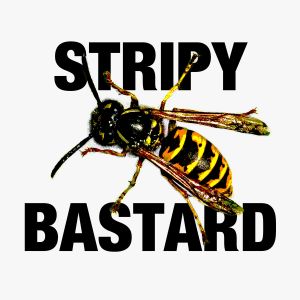
Wasps are the Gripper Stebsons of the insect world. They serve no obvious purpose, contribute nothing to the ecosystem (don’t let any wasp apologists tell you otherwise), and yet swagger about your garden like they own the place.
Try enjoying a picnic in Scotland. Lay out a sandwich, maybe a wee scone with jam, and within seconds you’ll be negotiating with a wasp like it’s the hostage taker and your Victoria sponge is the hostage.
You wave your hand at it and it just hovers, unbothered, like: “Aye, dae that again and I’ll go up yer nose, pal.”
And they never die. You could swat a wasp with the Beano and it’ll come back twice as angry, dragging its broken leg behind it like a horror movie villain. We had cause to get The Man round to exterminate three to four bikes worth that had taken residence in the rear wall of the house. “Don’t go out there for the next day or so. They’re quite angry.” No kidding. I swear they collectively made an arrow shape when I was running for the car.
And the Wasp Remover was nothing like this Burnistoun classic character, though I wish he was.
That’s Shakespeare St in Maryhill, by the way, just outside one of the best car mechanics in the city, TR Autos.
Ants: The Silent Invasion
Ants don’t get the same press as wasps or midges. They’re subtle. They sneak in. First it’s just one, maybe two, casually marching along your garden path like they’re inspecting the place. Next thing you know, there’s a full battalion laying siege to your back doorstep with the discipline of a Roman legion.
And God help you if they’ve found a food source.
I once dropped half a sausage roll on the grass. Within fifteen minutes it had vanished, presumably into a tunnel under the lawn. It’s probably powering an ant city under there, complete with shops, transport links, and a Greggs.
Worst part is, if you dare to retaliate, they bring in the winged ones. A flying ant day in Scotland is like something out of a biblical plague. You’ll look out the window and think, “Oh, a wee breeze,” only to realise it’s the sky crawling.
And don’t kid yourself—those things don’t just fly. They aim. Right for your mouth. Open your gob during flying ant season and you’re basically ordering the tasting menu.
Slugs: The Ominous Boak
Now, slugs aren’t technically insects, but they deserve an honourable mention for being the only thing in your garden that can ruin your flowers and your breakfast.
There’s no feeling quite like reaching into a flowerpot and grabbing what you think is a damp bit of soil, only for it to move and leave slime on your hand like it’s shaking hands with you. No thank you.
Every Scottish gardener has at some point gone full serial killer on a slug, usually with salt, scissors, or an old shoe. Not I though. For some it’s not pretty but personal, but they’re just doing what a homeless snail is meant to. There are other ways to deter them, such as using copper bands as protection.
Conclusion: Embrace the Chaos
So yes, your garden may be a lush paradise of blooms and birdsong. But it’s also a battleground. The insects are coming, and they’re not here to admire your begonias. They want blood, snacks, and ideally a place to build a nest so they can terrorise you every summer from now until death.
Still, it’s not all bad. Think of it as character building. What’s gardening without a bit of jeopardy? Without an unusual allergic reaction? Without the vague sense you’re being watched by something with compound eyes? I limped to the chemist a few years ago with a swollen leg, only to be told to go to hospital immediately. It turned out I had been bitten by a False Widow spider and my pin had turned into a cartoon ham. Makes for a decent pub story. And besides, if you can survive Scottish insects, you can survive anything.
Now, time for antihistamines and quinine. The wasps are back.
Leave a Reply